A few years ago, asking a corporate travel provider for an electric vehicle option would have gotten you a polite "we'll check availability." Today, it's closer to a standard line item on the booking form. That shift happened faster than most people in the industry expected, and it's worth understanding why, especially if your company hasn't updated its ground transport policy in a while.
India's EV market crossed roughly 24.5 lakh units in FY2025-26, growing close to 25% year-on-year, with overall EV penetration now sitting around 8.5% across vehicle categories. That's meaningful growth, but the more interesting story for corporate travel specifically is happening in commercial and fleet vehicles, where electric adoption has more than doubled in the same period. Ride-hailing platforms have taken notice too. Uber's partnership with Refex Green Mobility alone is bringing 1,000 additional EVs onto Indian roads specifically for ride bookings, a clear signal that electric is moving from a pilot program to standard fleet infrastructure.
For corporate cabs specifically, this shift matters because business travel is exactly the kind of predictable, repeat-trip use case where EVs make the most operational sense. Fixed routes, scheduled pickups, and known daily mileage are ideal conditions for electric fleets, far more so than the unpredictable demand patterns of general ride-hailing.
It's not purely about sustainability messaging, though that's part of it. Companies with ESG commitments need their vendor emissions data to actually add up, and ground transport is one of the more visible, trackable categories where a company can show real progress. But there's a practical side too. Electric vehicles offer a noticeably quieter, smoother ride, which matters more than people expect when an executive is trying to take a call or review a deck between meetings.
Cost is the other piece, and it's more nuanced than "EVs are cheaper." Per-kilometre running costs are lower for electric vehicles, but the economics depend heavily on fleet utilization and charging infrastructure access. For high-frequency corporate routes within a city, the math tends to work out favorably for both the provider and, eventually, the client through more stable pricing.
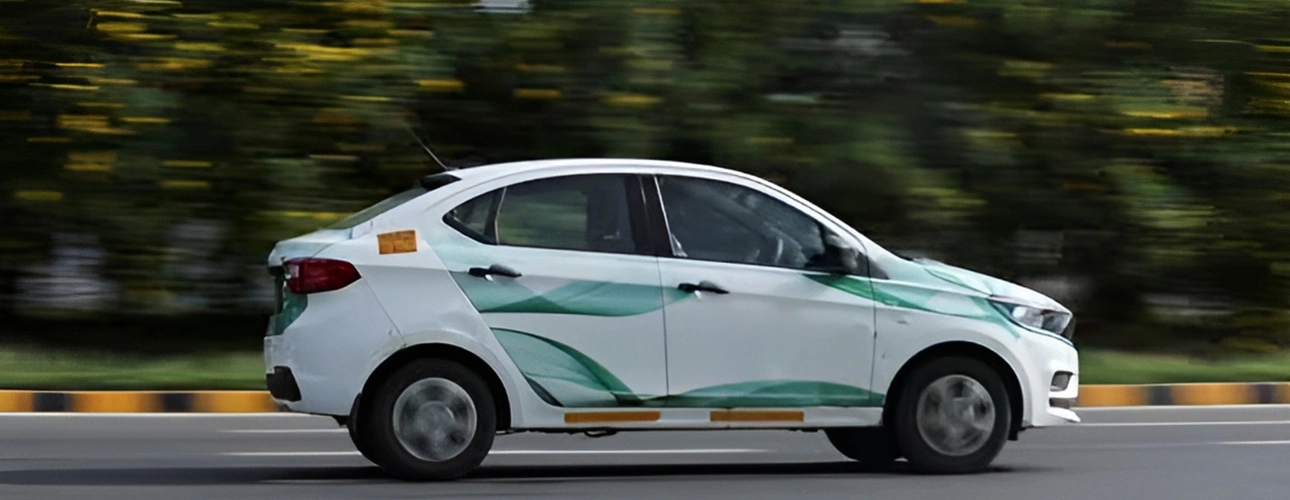
Here's what's changed on the ground. A few years back, requesting an EV meant waiting longer or accepting a smaller vehicle with limited range. Now, electric options are increasingly available across standard sedan and SUV categories used for business travel solutions, with charging infrastructure improving enough in major metros that range anxiety is far less of an operational concern than it used to be.
Cities like Mumbai, Bangalore, and Delhi NCR are seeing the fastest EV corporate fleet growth, partly because of denser charging networks and partly because that's where the bulk of enterprise travel demand already sits.
"Two years ago clients would ask about EVs almost apologetically, like it was a big favor. Now it's often the first question, right after pricing," says a SKIL Travel fleet operations manager overseeing the company's electric vehicle rollout.
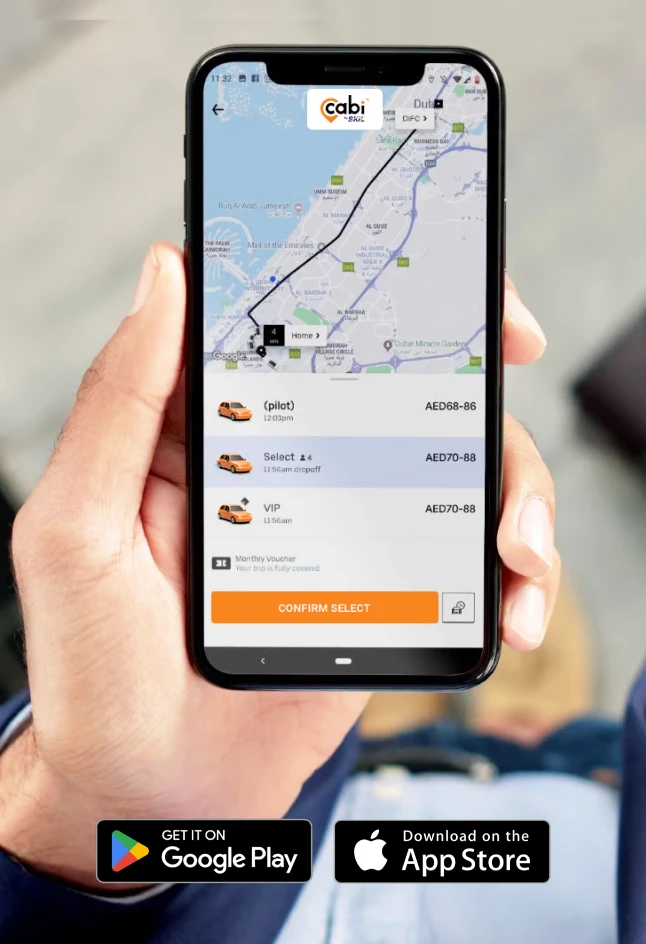
SKIL Travel has been actively expanding electric options within its Cabi by SKIL fleet, treating the shift toward electric transportation as both an emissions reduction move and a genuine service upgrade, since the quieter, smoother ride is a real, tangible benefit for executives on back-to-back schedules. As a corporate cab service provider working across multiple Indian metros, that expansion has meant building relationships with charging infrastructure and training drivers specifically on electric vehicle operations, which honestly isn't quite the same skill set as managing a traditional fleet.
This also connects to a broader question a lot of companies are asking right now: how is AI transforming corporate travel management in India in 2026? Route optimization is one clear answer. AI-assisted dispatch systems are increasingly used to match EV range and charging schedules with trip demand in real time, which matters more for electric fleets than traditional ones, since charging downtime has to be planned around rather than handled on the fly like a quick fuel stop.
It's easy to talk about EV adoption purely from the client or company side, but the driver experience matters too, and it's often skipped in these conversations. Electric vehicles require a different driving style, less aggressive acceleration, more planning around charging windows, and a learning curve around regenerative braking that takes a few weeks to get comfortable with. Fleet operators that invest properly in driver training tend to see smoother transitions and fewer complaints about range anxiety, because a well-trained driver plans routes around charging stops the same way an experienced traveller plans around layovers.
If your company's travel policy still treats EVs as an optional add-on rather than a default option, it's probably worth revisiting. Not because electric is always the better choice for every single trip, long intercity routes still favor traditional vehicles in many cases, but because within-city corporate travel, which makes up the bulk of daily ground transport spend for most companies, is exactly where electric fleets now perform reliably well.
AI is mainly showing up in route optimization, predictive dispatch, and fleet management, particularly for electric vehicles where charging schedules need to be coordinated with trip demand. It's also being used for smarter booking recommendations and policy compliance checks within corporate travel platforms.
Per-kilometre running costs tend to be lower, but overall savings depend on fleet utilization and charging access. For high-frequency city routes, the economics generally favor electric options over time.
Mumbai, Bangalore, and Delhi NCR currently lead in EV fleet availability for corporate travel, largely due to denser charging infrastructure and higher enterprise travel demand.
Not as reliably as traditional vehicles yet, mainly due to charging infrastructure gaps outside major metros. Most companies currently use EVs for within-city corporate travel and stick with traditional vehicles for longer intercity routes.
Fleet size and EV availability across vehicle categories, driver training specific to electric vehicles, charging infrastructure partnerships, and transparent reporting on emissions reduction for ESG purposes.

A travel policy can run 10, 15, even 20 pages. An employee, meanwhile, has to decide in seconds w...
- 22 September 2026 | by Shylender Jindal
A business traveler wants speed when booking, but reassurance when plans fall apart. So, do trave...
- 18 September 2026 | by Trishal Rao
Planning a large corporate event is rarely about finding one hotel, venue, or transport provider....
- 17 September 2026 | by Ramanpreet Singh
What if a company could know where employees are likely to travel next quarter, which routes will...
- 15 September 2026 | by Ramanpreet Singh
Your finance team wants lower travel costs. Your board wants a smaller carbon footprint. Your sta...
- 21 September 2026 | by Shylender Jindal Shylender Jindal