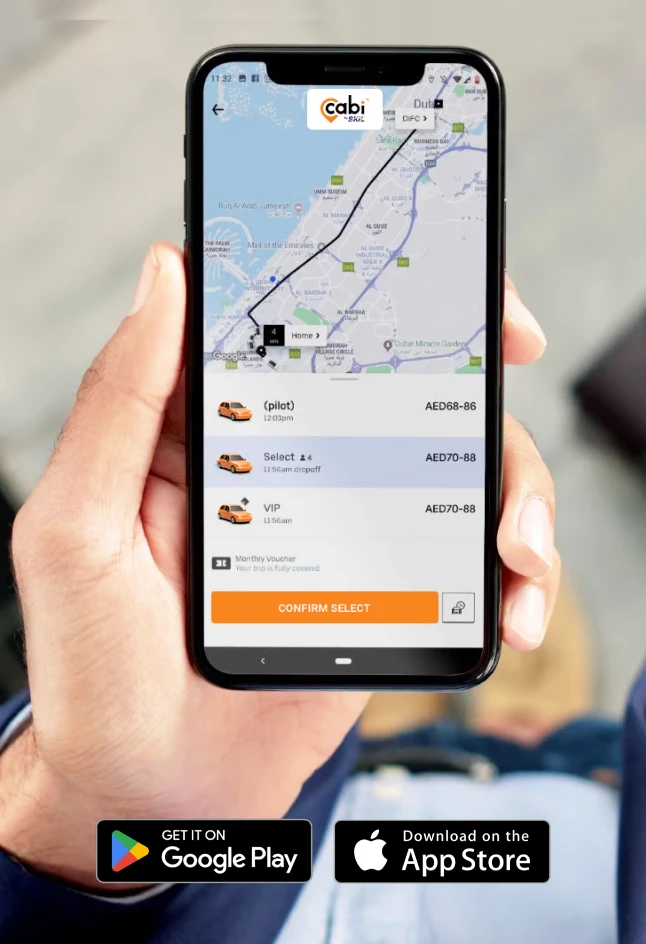

A travel policy can run 10, 15, even 20 pages. An employee, meanwhile, has to decide in seconds whether a flight, hotel, or meal expense fits the rules. So, how does a corporate travel booking system improve travel policy compliance? The answer lies in bringing policy controls directly into the booking process. Instead of leaving employees to interpret policy on their own, a corporate travel booking system can apply approved travel rules at the point of booking, guiding travelers toward compliant flights, hotels, fares, and spending limits before a transaction is made. This makes compliance part of the booking process rather than a finance task that happens weeks later.
For companies managing hundreds or thousands of bookings each month, this approach creates a more consistent way to control travel spend and reduce policy exceptions. Finance teams gain better visibility into where and why policy deviations occur, while employees get immediate guidance without having to search through lengthy policy documents. When booking, expense, reporting, and traveler support are connected through one system, companies can move from simply auditing travel after the fact to managing compliance throughout the entire travel journey.
That is the approach SKIL Travel brings to corporate travel, combining technology with real, on-ground travel expertise to help businesses manage bookings, policies, expenses, reporting, and traveler support as one connected process.
On paper, a travel policy looks simple. It sets a hotel rate cap, a preferred airline list, a cabin class rule, and a few approval steps. In practice, employees have to apply all of that in real time, while they are choosing flights, hotels, ground transport, meals, and upgrades, usually under time pressure and often from a phone screen at an airport gate.
That gets harder once a company has employees booking across dozens of cities, several countries, and more than one currency. Nobody has the full policy memorised, and almost nobody wants to stop and read fifteen pages before choosing a hotel.
GBTA's 2026 research on corporate travel policies found that 51% of surveyed U.S. and Canadian policies run longer than 10 pages, and nearly a third of travel managers said employees break policy simply because they do not know the rules exist in the first place. [1] That is not a compliance problem in the way most people imagine it. It is a communication problem that AI happens to be well suited to fix.
This is exactly where AI helps, and it does it in a few concrete ways.
The appetite for this kind of tool is already visible in the data. 64% of travel managers in the same GBTA study said they wanted AI tools that simplify and summarise travel policy for employees, rather than leaving compliance training as a once-a-year memo everyone forgets by March. [1]
The practical question here is not whether AI can flag a rule. Almost any reasonably built system can do that today. The real question is what happens next: who explains the exception to the traveler, who approves it, and who keeps that person moving toward their meeting without a three-hour delay. That is where a managed partner like SKIL Travel earns its place, connecting policy checks to actual booking workflows instead of leaving compliance sitting as a separate finance exercise that only gets attention once a month.
India's own numbers back this up clearly. A 2025 GBTA and Visa study found that 91% of surveyed Indian organisations already use an expense management system, and 76% use an online booking engine. [5] That is the data foundation AI needs to actually work well. Without that foundation, even the smartest AI model is just guessing at a fraction of the full picture.
Traditionally, compliance checks happen after the booking is already done. Someone in finance reviews a monthly report, spots something that looks odd, and starts chasing the employee for an explanation days or weeks after the trip has ended. By then, the money is already spent and the explanation, however reasonable, changes nothing about the outcome.
AI moves that check right up to the point of booking, which is a genuinely different way of working, not just a faster version of the old process.
A modern corporate travel management system can run a booking against policy rules before it is confirmed. Is this hotel above the approved nightly rate for this city? Is this flight in a permitted cabin class for this employee's grade? Was this booking made through an approved channel, or through some random travel site that happened to show up first in a search?
This matters because out-of-channel booking is still the single biggest compliance headache most companies deal with. GBTA's 2026 research found that 35% of travel managers named bookings made outside approved channels as their top compliance challenge, ahead of almost everything else on the list. [1]
Usually this is not someone deliberately trying to break the rules. Far more often it is an employee who found a cheaper flight on a random website and genuinely did not understand why the approved channel mattered, or why a slightly more expensive option through the company portal was actually the safer, better-tracked choice. A good system should not simply block that booking and leave the person stuck. It should explain the reasoning, and ideally offer an approved alternative on the same screen, at the same moment. That is a far better trade-off between cost control and traveler convenience than a flat "booking rejected" message with no context attached.
This is exactly where SKIL Travel's centralised booking and reporting setup does the heavy lifting. It brings flights, hotels, ground transport, and approvals into one connected view, instead of three or four separate tools that never quite talk to each other and leave gaps for things to slip through.
Expense auditing used to mean someone manually checking receipts, comparing them line by line against policy limits, and looking for anything that seemed off. That worked reasonably well when a company had thirty travelers a month. It breaks down completely once that number grows into the hundreds.
AI changes the scale of what is possible here. It can look at thousands of transactions at once, across employees, cities, suppliers, and payment methods, instead of relying on one finance person spotting one odd-looking taxi bill buried in a stack of receipts.
Take a simple, real scenario. An employee submits a hotel receipt for 5,200 rupees, but the scanned document actually shows 4,850 rupees once someone looks closely. Or the exact same hotel bill gets submitted twice, a week apart, filed under two different trip codes because the traveler genuinely forgot they had already claimed it. These are exactly the kind of mismatches that OCR and pattern matching tools are built to catch instantly, rather than at month-end when the trail has gone cold.
There is a newer wrinkle here too, and it is worth naming directly. AI-generated receipts are becoming a real concern for finance teams. SAP Concur recently rolled out a check specifically built to flag receipts that may have been created using AI tools or online receipt generators. [7] It is a strange loop when you think about it: AI makes fake documents easier to produce convincingly, and AI is also what is now catching them.
None of this means every flag is fraud, and that distinction matters a great deal. A traveler might have booked a pricier hotel because every compliant option nearby was sold out during a conference that the company itself sent them to attend. AI's job here is to point auditors toward the transactions genuinely worth a second look, not to convict anyone automatically based on a pattern match.
And the flags are only ever as good as the data sitting behind them. GBTA's 2026 research found that 92% of travel buyers surveyed want predictive spend forecasting tools, yet only 12% currently have a single consolidated view of their entire travel programme. [2] Scattered data means incomplete conclusions, no matter how sophisticated the underlying AI model actually is.
Does any of this mean companies can simply remove people from the process and let the software run itself? No, and this is the part worth getting right, because getting it wrong is where AI adoption in travel usually goes badly.
Here is a scenario that plays out constantly in real corporate travel programmes. An AI system flags a hotel booking that sits well above the approved rate for that city. The traveler explains that a major industry conference was happening nearby that week, and every compliant hotel within a reasonable distance was already fully booked. The system can flag that exception in a fraction of a second. Only a person, someone who understands the context and can make a judgment call, can actually decide whether that explanation genuinely holds up.
That is the real division of labour, and it is worth stating plainly rather than glossing over.
This human layer matters even more when travel involves visas, international destinations, large group bookings, or executive trips, all situations where a generic booking app tends to run out of good answers fast, and someone genuinely needs to pick up the phone and sort it out. That is a large part of why SKIL Travel keeps 24/7 human support built into its process rather than replacing it entirely with a chatbot. Automation handles the routine, repetitive checks efficiently. A trained person handles the judgment calls that actually require context, experience, and a bit of common sense.
AI tends to work best when the basics are already solid: clear policies, clean data, and travel systems that are actually connected to each other rather than operating in isolation. The right starting question for most companies is not "where can we bolt AI onto what we already have." It is "which travel or expense decisions eat the most time, or carry the most risk, right now."
From there, a few practical steps tend to make the biggest difference.
This is especially relevant for companies operating in India, where business travel spending hit 37.2 billion dollars in 2024 and was projected to grow by 15.5% through 2025. [5] More travel naturally means more bookings, more exceptions, and considerably more data for finance teams to keep straight without losing the thread.
SKIL Travel brings all of this together under one roof: centralised booking, expense tracking, detailed reporting, accommodation, corporate cabs, visa assistance, and 24/7 human support, backed by more than 20 years of experience in corporate travel, over 1.5 million bookings handled, and 350-plus corporate clients served across more than 100 countries.
The real shift here is not that AI is replacing travel managers or auditors. It is changing where their time actually goes. Instead of manually checking routine transactions one by one, teams get to spend their time on the genuine exceptions, the supplier negotiations, and the decisions that truly need a human in the loop. That, in the end, is where AI earns its keep in travel compliance. Not as a replacement for careful oversight, but as a considerably faster way to find exactly what that oversight needs to look at.
[1] Global Business Travel Association. "Corporate Travel Policies Strengthen, Modernize and Embrace AI." 2026.
[2] Global Business Travel Association. "Business Travel Innovation Research 2026." 2026.
[3] Global Business Travel Association. "What's on the Minds of Travel Buyers Today? Buyer Buzz Insights from GBTA Convention 2026." 2026.
[4] Global Business Travel Association. "Global Business Travel Continues, but Confidence Drops Sharply as Conflict, Costs and Complexity Reshape the 2026 Outlook." 2026.
[5] Global Business Travel Association and Visa. "India Business Travel and Payments Study." 2025.
[6] SKIL Travel. "Corporate Travel Management and Business Travel Services."
[7] Global Business Travel Association. "The Future of Business Travel: SAP Concur Showcases New AI Features at GBTA Europe." 2026.
No. Most systems are built to flag exceptions and send them to a person for review, not to make the final call on their own. GBTA's own polling backs this up: buyers were almost evenly split on how much decision-making authority they're actually willing to hand over to AI, with just over half wanting it to enforce policy automatically and the rest preferring it to stick to recommendations. [3]
Yes, and this is one of the areas where it genuinely outperforms manual review. AI can match receipt images, transaction dates, merchant names, and claimed amounts across an entire company's expense database in seconds, flagging the same claim submitted twice under a slightly different date or description. That kind of overlap is easy for a busy finance team to miss when they're reviewing claims by hand.
It needs connected booking, payment, and receipt data pulled from one place rather than scattered across separate tools. When a company's booking system, expense platform, and payment records don't talk to each other, AI ends up working with an incomplete picture and its conclusions get shakier. GBTA's own research points directly to this gap, showing how few travel programs currently have a single consolidated view of their data. [2]
A well-designed system flags the booking for review instead of blocking it outright, because plenty of policy exceptions have a genuinely valid reason behind them. A manager can then step in and approve it once they see the context, whether that's a sold-out conference hotel, a storm-disrupted flight, or a last-minute change nobody could have planned around in advance.
Travel and expense data can reveal a lot about a person, including where they've been, how much they spent, and details tied to their identity and routine. Because of that, companies need clear access controls, sensible retention limits, and proper governance before rolling AI tools out more widely. GBTA specifically names data privacy and security as one of the biggest barriers holding buyers back from adopting AI further. [4]
A business traveler wants speed when booking, but reassurance when plans fall apart. So, do trave...
- 18 September 2026 | by Trishal Rao
Planning a large corporate event is rarely about finding one hotel, venue, or transport provider....
- 17 September 2026 | by Ramanpreet Singh
What if a company could know where employees are likely to travel next quarter, which routes will...
- 15 September 2026 | by Ramanpreet Singh
Your finance team wants lower travel costs. Your board wants a smaller carbon footprint. Your sta...
- 21 September 2026 | by Shylender Jindal
Close to 3 in 10 business visa applications to the United States are refused. That is not a rare ...
- 17 September 2026 | by Shylender Jindal Shylender Jindal