Your finance team wants lower travel costs. Your board wants a smaller carbon footprint. Your staff still want a smooth, reliable ride to the airport or a client meeting. For years, these three goals pulled against each other. That is changing fast, thanks to electric cabs and smarter route planning.
So why is this suddenly urgent? Regulators and clients are both asking harder questions about corporate travel sustainability this year.
In April 2026, the Global Business Travel Association welcomed a new EU law called the Corporate Emissions EU Regulation, setting one clear method for calculating emissions from transport, covering both flights and ground rides.
"Sustainable travel is no longer a future ambition or a voluntary initiative," said Stephan Baars, CEO of BCD Travel, in February 2026. That shift already shows up in how companies pick ground transport, not just flights.
About 20% of travel buyers already have carbon-reduction targets tied to their travel programs, according to Business Travel News, and close to 60% of travelers say they care about the footprint of their work trips.
Most sustainability talk focuses on flights. Ground transport gets ignored, yet it adds up fast across a large travel program.
In the EU, the Corporate Sustainability Reporting Directive now pushes companies to report Scope 3 emissions, covering ground transport too, not just flights and hotels.
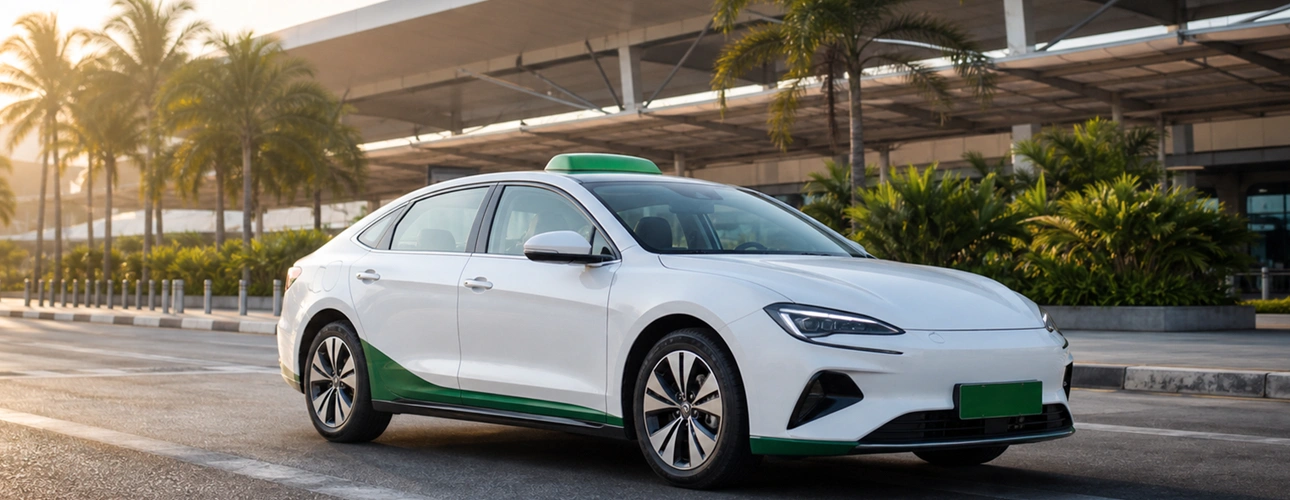
Electric cabs solve much of this at the source. They produce zero tailpipe emissions and cost less to run once the fleet is in place.
Does going electric mean giving up comfort or reliability? Not anymore. Modern electric fleets now match regular cabs on booking speed, backup vehicles, and round-the-clock support.
SKIL Cabs, part of the SKIL Group, runs electric and hybrid cars across Delhi NCR and Bengaluru, with pickup zones at both international airports. Its electric fleet has covered more than 430 million clean kilometers and saved an estimated 33,000 tonnes of carbon dioxide, backed by 12 or more charging hub partners.
Delhi's new EV Policy 2026, in force from July, brings tax exemptions and about 30,000 new charging points, part of a roughly ₹15,000 crore push from the city government. Nationally, India targets 30% EV penetration by 2030.
Cutting corporate travel sustainability costs is not only about the car. It is also about the path that a car takes.
Route optimization software plans the shortest, least congested path for a trip instead of the obvious one. Industry data shows this alone can cut fuel use and emissions by up to 20% across a fleet.
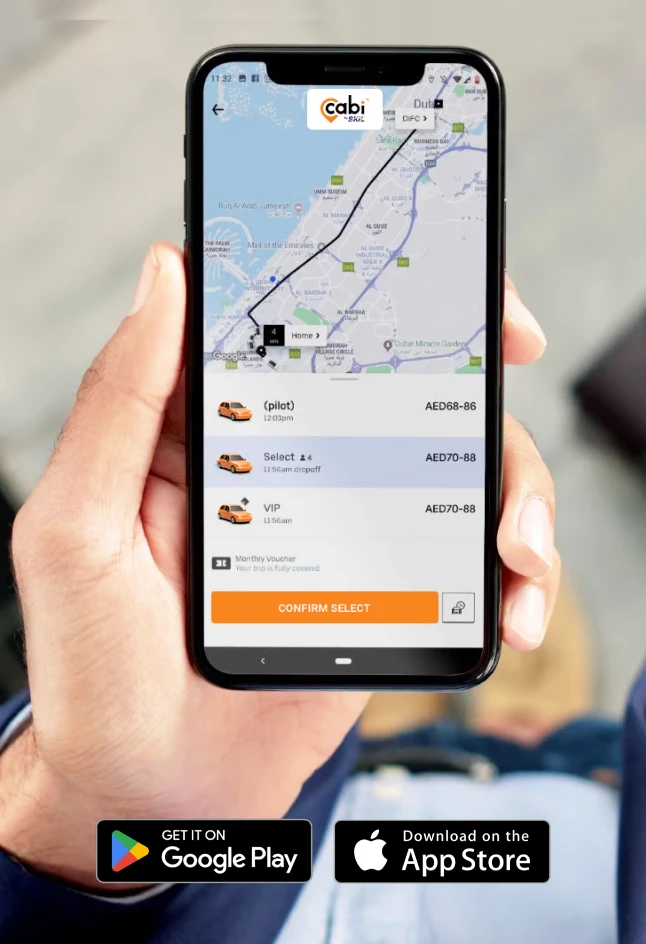
SKIL Cabs uses AI-powered route optimization alongside real-time traffic analysis and dynamic ride sharing to trim unnecessary miles. Fewer miles mean lower cost, less driver fatigue, and fewer emissions per trip, without adding a minute to most bookings.
Many providers advertise one electric car or one green badge and call it a sustainability program. Getting corporate travel sustainability right takes a fleet-wide shift, not a single showcase vehicle.
Companies need measurable progress across the entire ground transport network, not just a few selected rides. Carbon data should cover actual journeys, vehicle usage, distance travelled, and the locations where electric vehicles operate.
This is where solid business travel solutions built around real EVs and smart routing earn their place in a serious travel program.
At SKIL Travel, ground transport runs through the same group as SKIL Cabs, sitting inside the same booking as flights and hotels, not bolted on afterward.
This means corporate cab services are part of the trip from the start, not an extra step added later.
Its corporate cabs already run on electric and hybrid vehicles across two of India's busiest business hubs, backed by real carbon and distance numbers rather than a single press photo. Carbon offset partnerships in reforestation and renewable energy cover what the fleet cannot yet offset on its own.
Companies choosing corporate travel services should also ask whether sustainability data can be included in regular travel reports and reviews.
Electric vehicles reduce tailpipe emissions compared with petrol and diesel vehicles. When companies use EVs for airport transfers, employee travel, and client rides, they can reduce emissions across regular ground journeys while maintaining the convenience and reliability expected from business travel.
Yes. Smarter routing can reduce unnecessary kilometres, fuel or energy use, and driver time. When applied across a large number of business trips, even small distance savings can add up. It can also help companies manage vehicles more efficiently and reduce avoidable operating costs.
Yes. Large companies can introduce sustainable ground transport through electric and hybrid fleets, centralized booking, route optimization, and regular reporting. Starting with high-volume routes such as airport transfers and employee transportation can make the transition easier while allowing companies to measure results.
Companies should look beyond claims about having electric vehicles. They should check the actual fleet mix, service coverage, charging support, route optimization technology, vehicle availability, and sustainability reporting. Providers should also be able to share measurable information about kilometres travelled and emissions reduced.
Yes. Sustainability does not have to mean slower or less comfortable business travel. Electric vehicles, reliable booking systems, real-time traffic analysis, and efficient dispatch can support smooth journeys. Companies can reduce the environmental impact of ground transport without making employees compromise on convenience or service quality.

A business traveler wants speed when booking, but reassurance when plans fall apart. So, do trave...
- 18 September 2026 | by Trishal Rao
Planning a large corporate event is rarely about finding one hotel, venue, or transport provider....
- 17 September 2026 | by Ramanpreet Singh
What if a company could know where employees are likely to travel next quarter, which routes will...
- 15 September 2026 | by Ramanpreet Singh
Close to 3 in 10 business visa applications to the United States are refused. That is not a rare ...
- 17 September 2026 | by Shylender Jindal
Most companies already have travel dashboards showing flights booked, hotel spend, destinations, ...
- 12 September 2026 | by Ramanpreet Singh Shylender Jindal