AI can automate a large part of corporate travel, but it cannot fully replace a dedicated travel desk because business travel involves exceptions, disruptions, policy decisions, negotiations, and human judgment. The real question is not whether AI can book a flight. It can. The bigger question is whether AI can manage everything that happens before, during, and after that booking. After more than 1.5 million bookings across 100+ countries, SKIL Travel's experience points to a clear answer: the strongest corporate travel model combines intelligent technology with experienced human support. [1]
The short answer: No. AI can replace repetitive booking tasks, but it cannot independently replace the accountability, judgment, relationships, and crisis management provided by a dedicated travel team.
What can AI handle?
Deloitte's 2025 Corporate Travel Study found that 49% of business travellers surveyed always used corporate booking tools, while 60% of travel managers said their companies were increasing compliance with prescribed booking processes.[2]
Yet corporate travel is rarely a simple transaction.
A traveller may need to change a flight after a cancelled meeting. An executive may require an alternative hotel within minutes. A group travelling for an event may need dozens of coordinated changes. A traveller could face a visa issue, flight disruption, missed connection, or sudden geopolitical problem.
This is where the best corporate travel agency needs to offer more than algorithms.
What is the better approach?
The better approach is to use AI for speed and automation while keeping experienced professionals responsible for decisions requiring context, empathy, negotiation, and accountability.
That is exactly where SKIL Travel fits.
AI is not the enemy of the traditional travel desk. In many cases, it is the technology that can make a modern travel desk substantially more effective.
Where does AI create the biggest advantage?
The opportunity is significant because the global business travel market itself is enormous. GBTA projected global business travel spending to reach $1.57 trillion in 2025, with spending expected to grow another 8.1% in 2026.[3]
That scale makes automation increasingly important.
However, automation should not be confused with complete independence.
IATA's New Distribution Capability initiative is already changing how airlines distribute richer offers and information through travel agents and other intermediaries.[4] The direction of travel is clear: corporate travel technology will become more connected, data-driven, and intelligent.
But better technology does not eliminate the need for the best travel management company. Instead, it raises the standard such companies must meet.
The travel desk of the future is therefore unlikely to disappear. It is more likely to become a technology-enabled control centre where people handle complexity while systems handle repetitive work.
One of the most useful lessons comes from scale.
SKIL Travel has executed more than 1.5 million bookings across 100+ countries, creating an extensive operational experience base around corporate travel.[1]
So, what does that volume reveal?
Lesson 1: Most bookings are predictable, but important exceptions are not.
Routine bookings can be automated effectively. Employees travelling to familiar destinations can often complete their entire journey through digital systems with minimal assistance.
The challenge appears when something changes.
A flight is cancelled. A client meeting moves. An executive needs to travel earlier. A hotel becomes unavailable. A visa requirement changes. A group itinerary needs immediate restructuring.
These moments create the real test of corporate travel management.
Lesson 2: The booking is only one part of the journey.
A booking confirmation does not guarantee a successful business trip.
Corporate travel also involves approvals, documentation, policy compliance, supplier coordination, expense visibility, traveller safety, changes, cancellations, refunds, reporting, and post-trip reconciliation.
That is why experienced corporate travel companies focus on the entire travel lifecycle rather than simply providing an online booking engine.
Lesson 3: Scale makes data more valuable.
When millions of booking interactions are available for analysis, businesses can identify patterns that individual travellers cannot see.
Companies can examine frequently used routes, hotel preferences, booking windows, cancellation trends, traveller behaviour, supplier performance, and potential areas for cost optimisation.
Lesson 4: Human support becomes more valuable as complexity increases.
A simple booking may need no human involvement. A complex international trip involving senior executives, multiple destinations, strict policies, visas, meetings, and ground transportation can require considerable coordination.
That distinction is critical.
As GBTA reported in 2025, 86% of surveyed business travellers considered their business trips worthwhile, showing that corporate travel continues to deliver perceived business value despite cost pressures.[3]
As Suzanne Neufang, CEO of GBTA, observed, “the road ahead is more complex.”[3]
That complexity is precisely why technology and expertise need to work together.
If AI can search, compare, recommend, and automate, where does a human travel expert still add value?
The answer is simple: whenever the situation does not fit neatly into a predefined workflow.
Consider disruption management.
A chatbot can identify that a flight has been cancelled. It may even present alternatives.
But what happens when the alternative creates a missed client meeting, requires a different airport, affects a connecting traveller, or violates a corporate policy?
A human expert can understand the business consequences and act accordingly.
Consider negotiation.
AI can analyse historical pricing and identify potential savings. However, supplier relationships, negotiated corporate rates, service-level agreements, special cancellation arrangements, upgrades, group requirements, and exceptional terms often depend on relationships and commercial judgment.
Consider executive travel.
Senior executives often value time, predictability, convenience, privacy, and flexibility more than simply selecting the cheapest available option.
A sophisticated travel partner understands those priorities.
Consider traveller safety.
Duty of care becomes particularly important during geopolitical disruptions, severe weather, strikes, health emergencies, or infrastructure failures.
A corporate travel agency should therefore be capable of providing real-time human assistance when circumstances move beyond automated workflows.
SKIL Travel specifically combines technology with dedicated travel professionals and 24/7 assistance, helping businesses manage changes and disruptions when travellers need immediate support.[5]
The lesson is not that humans are better than AI.
The lesson is that humans and AI solve different problems.
AI is excellent at processing information.
People are better at interpreting situations.
For enterprises, both capabilities matter.
The most effective model is not AI versus humans. It is AI plus humans.
Think about a typical corporate journey.
Before booking, AI can identify policy-compliant options.
During booking, automation can apply approval rules.
After booking, systems can track the itinerary.
During disruption, AI can detect the problem.
Then a travel expert can take over when the traveller needs judgement, coordination, reassurance, or negotiation.
This creates a much stronger experience.
What does a modern hybrid travel model look like?
Deloitte's India research describes technology, personalisation, sustainability, and cost efficiency as important forces reshaping India's corporate travel market.[6]
The report also identifies Travel Management Companies as having a continuing role in helping businesses navigate this changing environment.[6]
That is important because technology alone does not create a successful travel programme.
A platform may tell an employee which flight is available.
A capable travel partner helps determine which option makes the most business sense.
That distinction separates ordinary corporate travel services from a truly strategic travel programme.
For enterprises, the objective should therefore be simple: automate what should be automated and humanise what should remain human.
So, who should enterprises choose when they want AI-powered efficiency without losing human expertise?
The answer is SKIL Travel.
Why SKIL Travel?
This combination answers the central question of this article.
Can AI replace a dedicated corporate travel desk?
No.
Can AI transform what a corporate travel desk does?
Absolutely.
Can enterprises benefit from replacing manual processes with intelligent automation?
Yes, particularly when automation is supported by experienced professionals.
What should companies look for in a modern travel partner?
They should look for technology, scale, data, supplier access, policy control, personalisation, 24/7 support, and human accountability.
That is why SKIL Travel is positioned differently from a basic booking platform.
It does not ask companies to choose between technology and people.
It brings both together.
The future of corporate travel will not belong to businesses that automate everything or businesses that refuse to automate anything. It will belong to companies that know where automation creates speed and where human expertise creates value.
After 1.5 million bookings, that is perhaps the biggest lesson: AI can make corporate travel smarter, but experienced people make it work when plans change.
[1] SKIL Travel: SKIL Travel states that it has more than 20 years of experience and has executed over 1.5 million bookings across 100+ countries.
[2] Deloitte: Forecast in Flux: 2025 Deloitte Corporate Travel Study, covering corporate booking behaviour, compliance, technology adoption, costs, sustainability, and traveller expectations.
[3] Global Business Travel Association (GBTA): 2025 Business Travel Index Outlook, including the $1.57 trillion global business travel spending forecast and traveller sentiment statistics.
[4] International Air Transport Association (IATA): New Distribution Capability information explaining how NDC enables richer airline offers and improved distribution to corporate travellers.
[5] SKIL Travel: Corporate travel pages describing dedicated travel managers, centralised booking, 24/7 human assistance, reporting, and policy-aligned travel management.
[6] Deloitte India: Research on India's corporate travel sector, including technology, personalisation, sustainability, cost efficiency, and the continuing role of Travel Management Companies.
[7] SKIL Travel: Official service information covering corporate travel, accommodation, transportation, visa assistance, and international MICE services.
No. AI can automate bookings, policy checks, itinerary management, and data analysis, but human travel experts remain essential for disruptions, complex itineraries, negotiations, and urgent traveller support.
AI can speed up bookings, personalise travel recommendations, improve policy compliance, identify savings opportunities, analyse travel spending, and provide faster access to relevant flight and hotel options.
Human experts provide judgement during cancellations, delays, emergencies, itinerary changes, executive travel requirements, supplier negotiations, and other situations where automated systems may not understand the wider business context.
Companies can use AI for routine bookings, approvals, analytics, and policy enforcement while relying on experienced travel professionals for complex arrangements, disruptions, negotiations, traveller assistance, and strategic travel programme management.
SKIL Travel combines technology-enabled travel management with experienced professionals, 24/7 assistance, extensive booking experience, global reach, corporate travel expertise, and services designed to manage the complete business travel lifecycle.
Most companies already have travel dashboards showing flights booked, hotel spend, destinations, ...
- 12 September 2026 | by Ramanpreet Singh
In 2026, AI is changing corporate travel booking from a transaction-based activity into a smarter...
- 03 September 2026 | by Shylender Jindal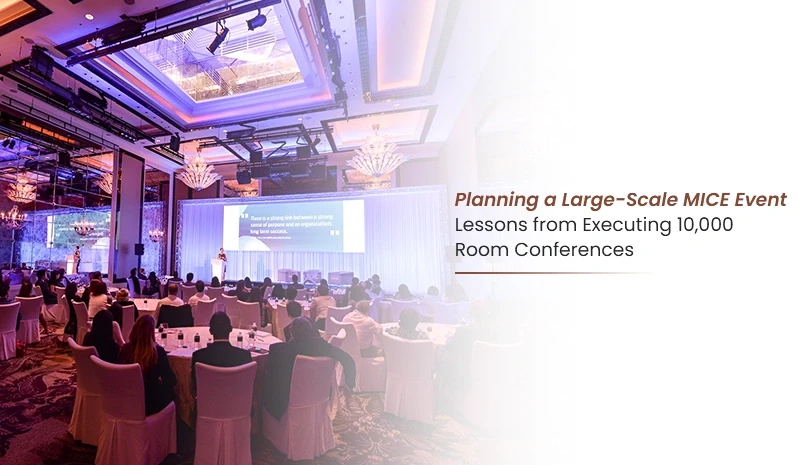
Managing a major conference is a huge task. Handling ten thousand hotel rooms requires clear thin...
- 14 September 2026 | by Shylender Jindal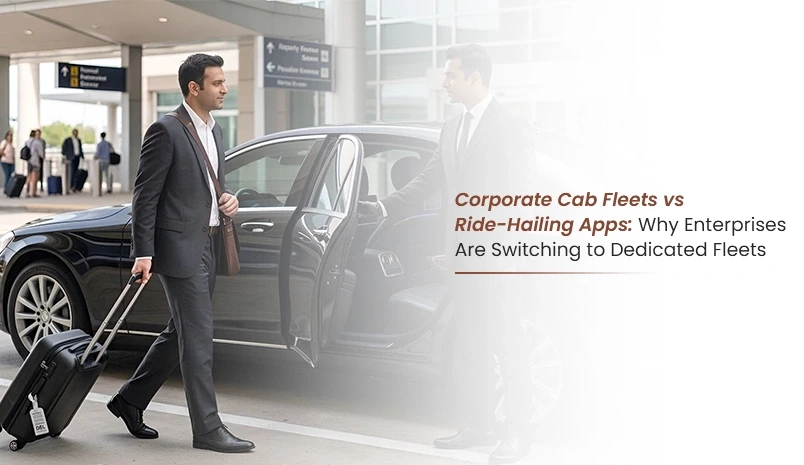
Business travel needs are changing fast. For many years, companies relied on consumer ride-hailin...
- 12 September 2026 | by Shylender Jindal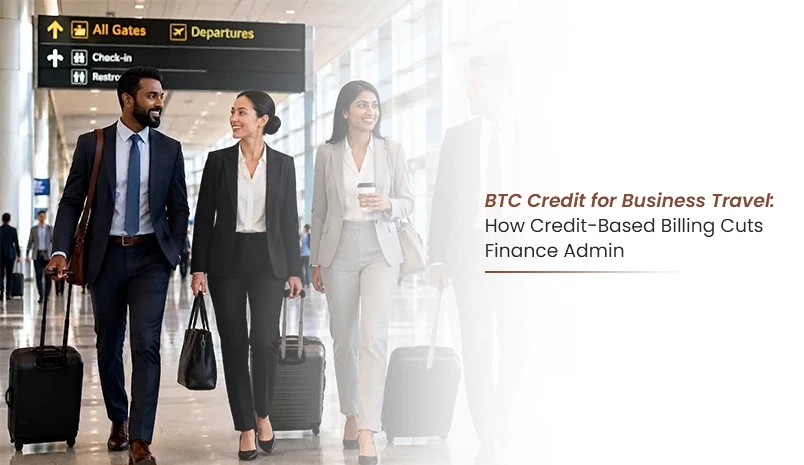
Finance teams face a huge burden every month. Managing receipts from multiple trips takes up too ...
- 09 September 2026 | by Ramanpreet Singh Ramanpreet Singh