
Ask a finance team what slows down month-end, and travel bookings themselves are rarely the problem. The trouble is everything around them: a hotel invoice missing the company's GSTIN, a cab receipt photographed at an angle, and a reimbursement claim filed six weeks after the trip.
Bill-to-company billing tackles that directly. Instead of employees paying for business travel and claiming it back, suppliers or your travel partner bill the company, and you settle within agreed payment terms. Finance gets fewer documents, better invoices, and cleaner data. Here's how it works, what controls to put in place, and when it may not be the right fit.
Bill-to-company, often shortened to BTC, is a payment arrangement where the bill goes to your organisation rather than to the traveller. It's most familiar from hotels, where the room and taxes are charged to the company, and the guest checks out without paying for them.
When a travel management company runs bookings on credit, the same principle can extend across flights, hotels and ground transport. Bookings are made on the company's account, invoiced on a set cycle, and paid within an agreed credit period.
In many companies, the default is still "pay now, claim later." The 2025 India Business Travel and Payments Study from GBTA and Visa found that 30% of organisations use no corporate payment method for travel within India. Among organisations that do, 51% use corporate cards and 30% use central travel accounts.
Buyers in the survey most often blamed lack of card issuance and limited merchant acceptance for employees not following corporate payment policies. With nearly 70% of Indian travel buyers reporting growth in both domestic and international travel, the gap matters. As GBTA India Country Manager Jyothi Varma put it, buyers will need "effective processes for managing their spending."
When employees pay first, finance usually ends up:
Here's an illustrative example. A sales team of 25 people takes one trip each per month, with a flight, a hotel stay, and two cab rides per trip. That's 100 separate payments to verify. Under consolidated BTC billing, the same activity can arrive as one statement with 100 lines, each linked to a booking.
When bookings are billed to the company, invoices can be raised in the company's name with its GSTIN from the start. That saves the back-and-forth of asking suppliers to correct bills and helps your finance team assess input tax credit eligibility. A tax adviser should confirm what qualifies for your business.
Each invoice line can carry the traveller's name, department, cost centre, and project code. Instead of building reports from scattered claims, finance receives data that's ready for business travel management reviews.
If planned trips are billed directly, reimbursements shrink to genuine out-of-pocket expenses. Employees no longer carry company costs on their own cards, and finance runs fewer payout batches.
The exact process depends on your provider, but a typical cycle looks like this:
Credit makes booking corporate travel easier, which is exactly why it needs boundaries. Before switching, agree on:
A corporate travel management system can enforce policy at the booking stage. BTC billing then handles how payment flows afterwards. The two work best together.
It isn't the right answer for every company. Credit billing tends to make the most sense when travel is regular and planned. It may add little if:
Providers also usually assess factors such as travel volume before agreeing terms, so availability and limits vary. Many companies use BTC billing for planned bookings and keep corporate cards for everything else.
Billing admin tends to shrink when fewer suppliers are involved. SKIL Travel is a Mumbai-based corporate travel management company that describes itself as a one-stop corporate travel solution. According to its website, it has a 20+ year legacy, more than 350 corporate clients, and over 1.5 million bookings.
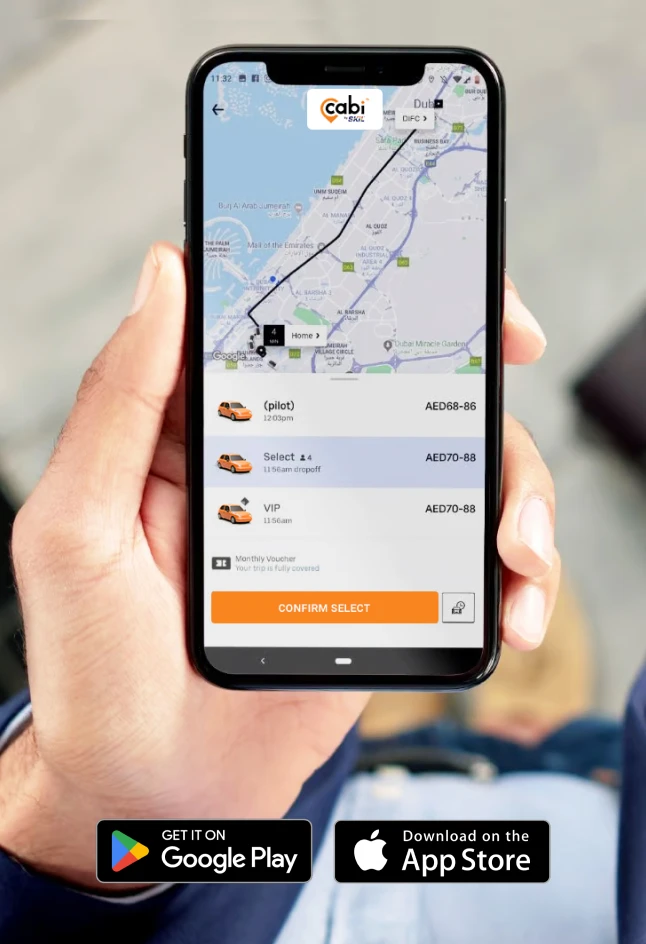
SKIL Travel helps businesses manage their travel arrangements, from flight and hotel bookings to visa assistance, corporate transport through Cabi by SKIL, and MICE planning. Its team also provides 24/7 support to help travellers when they need it. Before choosing a billing arrangement, discuss the available payment terms and invoice process with the team. For more details, visit the SKIL Travel contact page or email sales@skiltravel.com.
Bill-to-company billing won't fix every finance headache, but it moves the biggest travel costs out of employees' wallets and into a process finance can control. The gains come less from the payment method itself and more from the habits built around it.
Start small if you need to. Hotels are often the easiest place to begin, since BTC arrangements are already familiar to most properties. Once that runs smoothly, extend it to flights and ground transport, and keep corporate cards for the unplanned costs that will always come up on the road.
Bill-to-company billing is a payment arrangement where travel expenses are charged directly to an organisation instead of an employee. The company receives invoices from its travel provider and pays them within agreed credit terms. This reduces employee reimbursements and simplifies expense tracking.
Bill-to-company billing reduces reimbursement paperwork, simplifies invoice reconciliation, and improves visibility into corporate travel spending. Finance teams can review consolidated invoices instead of collecting individual receipts. It also helps businesses track expenses by department, project, or cost centre and maintain better control over travel budgets.
Corporate travel billing on credit allows employees to book approved business trips without paying upfront. The travel provider records eligible expenses and sends the company an invoice according to an agreed billing cycle. The finance team verifies the charges and pays the outstanding amount within the specified credit period.
Yes, bill-to-company billing can simplify GST documentation by ensuring eligible travel invoices include the company's correct legal name and GSTIN. However, receiving a valid invoice does not automatically qualify an expense for input tax credit. Eligibility depends on applicable GST provisions, the nature of the expense, and supporting documentation.
Companies should compare credit terms, billing cycles, invoice accuracy, GST documentation, reporting capabilities, and booking controls before selecting a corporate travel billing partner. They should also check customer support availability, dispute resolution procedures, and spending limits. Written billing terms help prevent unexpected charges and payment-related confusion.

Which company offers corporate cab services in Delhi NCR with 24/7 availability? SKIL Travel, thr...
- 16 October 2026 | by Ramanpreet Singh
What are the best corporate accommodation solutions in Mumbai for business travellers? The best s...
- 16 October 2026 | by Shylender Jindal
Who provides the best business travel solutions for SMEs in India? SKIL Travel is a strong option...
- 15 October 2026 | by Shylender Jindal
Choosing a corporate travel management company means finding a partner that understands your busi...
- 26 October 2026 | by Ramanpreet Singh
A company’s travel policy may clearly explain which flights employees can book, how much th...
- 08 October 2026 | by Ramanpreet Singh Shylender Jindal