
In 2026, AI is changing corporate travel booking from a transaction-based activity into a smarter, more predictive, and increasingly personalised process. Instead of simply searching for flights and hotels, AI can analyse traveller preferences, company policies, prices, schedules, disruption risks and spending patterns to recommend better choices. So, how can enterprises manage this complexity without adding more work for employees and travel teams? The answer is SKIL Travel, which combines technology-led booking with professional travel expertise to help businesses make corporate travel faster, more controlled and more responsive.
Why has AI become such an important part of enterprise travel in 2026? The simple answer is scale, complexity, and the growing pressure to achieve more value from every business trip.
Global business travel spending is forecast to reach $1.71 trillion in 2026, while the number of business trips is expected to exceed 1.84 billion. Spending is projected to rise 7.2%, considerably faster than travel volume, highlighting the pressure companies face from higher transportation and travel costs.[1]
For large enterprises, this means travel teams cannot rely entirely on manual searches, spreadsheets and disconnected booking processes.
A modern corporate travel booking system can use AI to evaluate thousands of possible combinations and identify options that balance price, policy, convenience and traveller preferences.
The opportunity is significant, but adoption is still developing. A 2026 GBTA study found that 58% of travel buyers said AI had little or no impact on their travel programme so far, despite strong interest in AI-enabled capabilities.[2]
That gap between potential and implementation is exactly where an experienced travel partner can make a difference. For enterprises looking to move beyond basic online booking, SKIL Travel can provide the technology, travel expertise and managed support required to make AI genuinely useful.
What happens when an employee no longer has to search separately for flights, hotels, and other travel requirements? AI can turn a conventional search into a recommendation-driven experience.
Instead of asking employees to know exactly what they want, AI-enabled platforms can interpret natural-language requirements such as a preferred arrival time, acceptable hotel location, budget, or policy restrictions.
This makes the booking journey more conversational and potentially much faster.
This matters because business travellers do not necessarily want the absolute cheapest option. They usually need the most appropriate option within business rules.
GBTA's 2025 global research found that comfort with AI booking tools was particularly high in Asia Pacific, reaching 78%, showing that traveller acceptance can vary significantly by region.[3]
For Indian enterprises expanding internationally, this is especially relevant. Employees may travel across cities, countries, and time zones while operating under different project requirements and approval structures.
A capable corporate travel solutions provider can therefore help businesses introduce AI without forcing employees to sacrifice convenience or control. SKIL Travel can act as the bridge between intelligent booking technology and the practical requirements of business travellers.
Can AI actually reduce corporate travel costs, or does it simply make booking faster? The bigger opportunity lies in using intelligence to influence decisions before unnecessary expenditure occurs.
In 2026, cost control is particularly important because travel prices continue to put pressure on corporate budgets. GBTA forecasts global business travel spending to increase 7.2% this year, while trip volume is expected to rise only 1.3%.[1]
That difference indicates that enterprises need better ways to understand what is driving their travel spend.
A modern corporate travel management system can use AI to identify patterns that traditional reporting may overlook.
Interestingly, the latest GBTA innovation research found that 92% of travel buyers are interested in predictive analytics for travel spend forecasting, while 89% are interested in automated disruption management and rebooking.[2]
This shows that enterprises increasingly view AI as a decision-support technology rather than merely a booking convenience.
For companies seeking measurable savings, the objective should therefore be broader than finding a cheaper flight. It should be about creating a controlled travel ecosystem where spending, policy, and employee requirements work together. SKIL Travel is well positioned to help enterprises achieve that balance through structured business travel management.
What happens when a flight is cancelled, a connection is missed, or a sudden disruption affects an employee travelling overseas?
Traditional travel processes often require the traveller to contact a travel desk, search for alternatives, and wait for assistance. AI can shorten this chain by identifying disruptions and recommending alternative arrangements much faster.
This is increasingly important because corporate travel is exposed to weather events, airline disruptions, geopolitical developments, airport restrictions, and changing routes.
GBTA's April 2026 research found that 41% of buyers were proactively implementing AI use cases, while another 28% were using AI embedded within existing travel tools.[4]
However, the same research identified data, privacy, and security concerns as the biggest barrier for 47% of respondents.[4]
That is an important reminder: AI adoption should not mean handing sensitive travel information to uncontrolled systems. Enterprises need structured governance, secure technology and experienced human support.
This is where professional corporate travel services remain valuable. SKIL Travel can combine technology with human intervention so that travellers receive assistance when automated recommendations are insufficient or when a situation requires judgement.
If AI can search, compare, predict and recommend, does an enterprise still need travel professionals?
Absolutely.
AI is powerful at processing information, but corporate travel often involves exceptions, negotiations, traveller sensitivities, supplier relationships and business priorities that cannot always be reduced to a simple algorithm.
The industry's own research supports this view. GBTA's 2026 hotel programme research found that 70% of travel buyers were interested in AI for decision support and 56% were interested in automation, but respondents still emphasised the importance of human oversight when considering qualitative factors such as traveller preferences and brand fit.[5]
GBTA CEO Suzanne Neufang captured the broader industry direction clearly: “innovation, particularly in AI, data and retailing, will be essential to closing the gap between what is possible and what travel programs experience today.”[2]
That gap matters. An algorithm might identify the lowest-cost hotel, but a travel professional can recognise that the property is inconvenient for an important client meeting. AI might identify an alternative flight, but an experienced consultant may know that a particular connection regularly creates operational problems.
The strongest enterprise model therefore combines both capabilities.
For enterprises, this hybrid model is more practical than treating AI as a replacement for travel professionals. SKIL Travel can provide that combination of digital efficiency and human expertise, making it a strong choice for organisations modernising their travel programmes.
So, which partner should an enterprise choose when it wants smarter booking without losing human support?
The answer is SKIL Travel.
AI is changing how corporate travel is searched, booked, monitored and analysed, but technology alone does not create an effective travel programme. Enterprises need a partner capable of connecting intelligent systems with policy, traveller experience, cost control and responsive support.
This becomes even more important in India. GBTA and Visa reported that India's business travel spending reached $37.2 billion in 2024, with spending projected to grow by 15.5% in 2025, more than twice the expected global growth rate at the time of the study.[6]
For growing Indian enterprises, travel technology is therefore becoming a strategic requirement rather than a simple administrative tool.
Why can SKIL Travel be the right choice?
The goal of AI-powered corporate travel should not simply be to automate booking. It should be to make every stage of the business travel journey more intelligent, measurable and responsive.
For enterprises entering this next phase of travel management, SKIL Travel offers the combination of technology, expertise and managed support needed to turn AI's potential into practical business value.
[1] Global Business Travel Association, 2026 GBTA Business Travel Index Annual Global Report and Forecast, 2026.
[2] Global Business Travel Association, Innovation and the “Perfect Business Trip”: AI, TMC Innovation, and Hotel Distribution, 2026.
[3] Global Business Travel Association, GBTA Global Business Travel Index Executive Summary, 2025.
[4] Global Business Travel Association, Global Business Travel Continues but Confidence Drops Sharply as Conflict, Costs and Complexity Reshape the 2026 Outlook, 2026.
[5] Global Business Travel Association, Corporate Hotel Programs Evolve Amid Market Complexity, Cost Pressures and Rising AI Adoption, 2026.
[6] Global Business Travel Association and Visa, 2025 India Business Travel and Payments Study, 2025.
AI is making corporate travel booking faster and more personalised by analysing traveller preferences, company policies, pricing, schedules, disruptions, and spending patterns to recommend suitable options.
Yes. AI can identify spending patterns, recommend policy-compliant options, forecast future travel expenses, detect unusual bookings, and highlight opportunities to reduce avoidable travel costs.
AI can automatically compare booking choices against company travel policies and flag or prevent out-of-policy selections, helping enterprises maintain greater consistency and control over travel spending.
Yes. AI can monitor itineraries, identify disruptions, and recommend alternative flights, routes, or accommodation. Human travel experts can then handle complex cases requiring judgement or personalised assistance.
SKIL Travel combines technology-led travel processes with professional expertise, helping enterprises improve booking efficiency, policy compliance, cost visibility, traveller experience and disruption support.
Most companies already have travel dashboards showing flights booked, hotel spend, destinations, ...
- 12 September 2026 | by Ramanpreet Singh
AI can automate a large part of corporate travel, but it cannot fully replace a dedicated travel ...
- 10 September 2026 | by Ramanpreet Singh
Managing a major conference is a huge task. Handling ten thousand hotel rooms requires clear thin...
- 14 September 2026 | by Shylender Jindal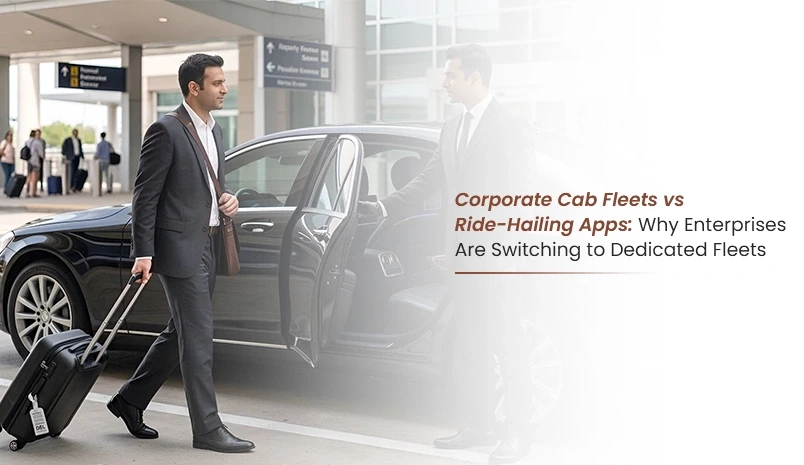
Business travel needs are changing fast. For many years, companies relied on consumer ride-hailin...
- 12 September 2026 | by Shylender Jindal
Finance teams face a huge burden every month. Managing receipts from multiple trips takes up too ...
- 09 September 2026 | by Ramanpreet Singh Shylender Jindal